 Digitari
SaaS · In-House Product
◐ IN DEVELOPMENT2024–Yesso
Our own SaaS product: email-based approval workflow platform with magic link auth, multi-tenant architecture, and sub-100ms load times. Approve requests in under 30 seconds, no login required.
Visit Live Site ↗<100ms
TTFB
Magic Link
Auth
Multi-tenant
Architecture
2026 launch
Status
PRODUCT DEMONSTRATION
Show, Don't Tell
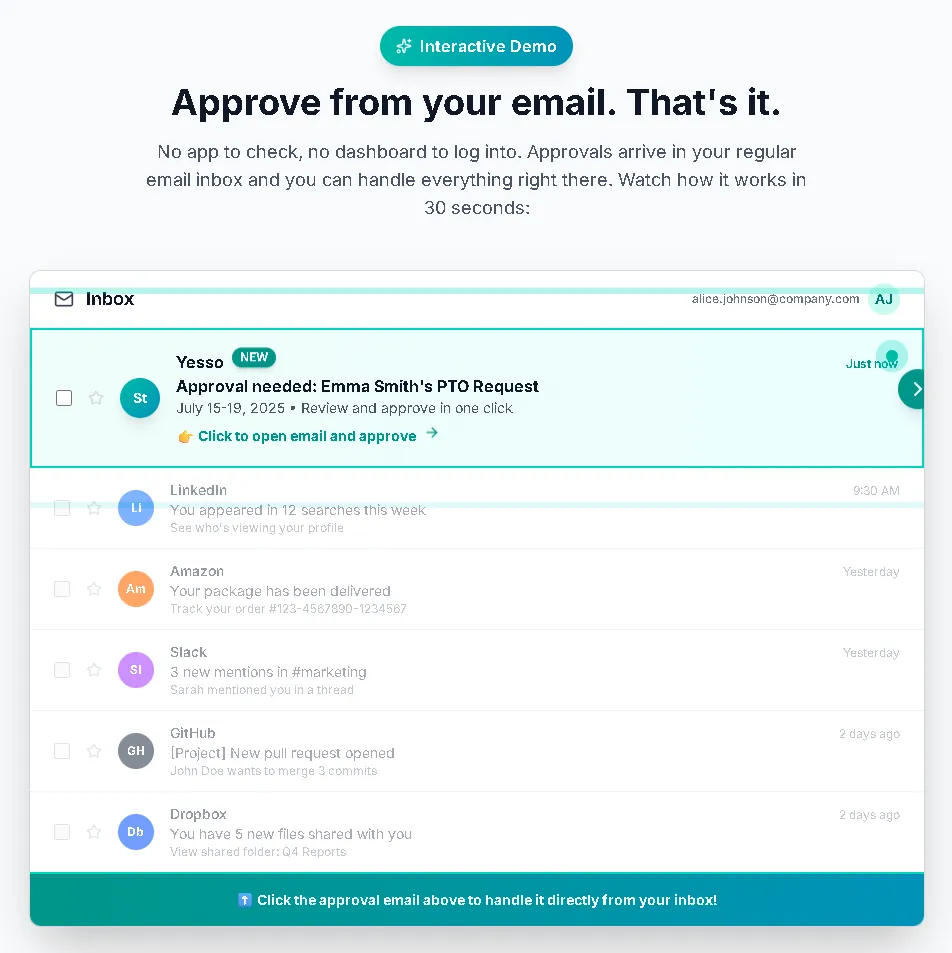
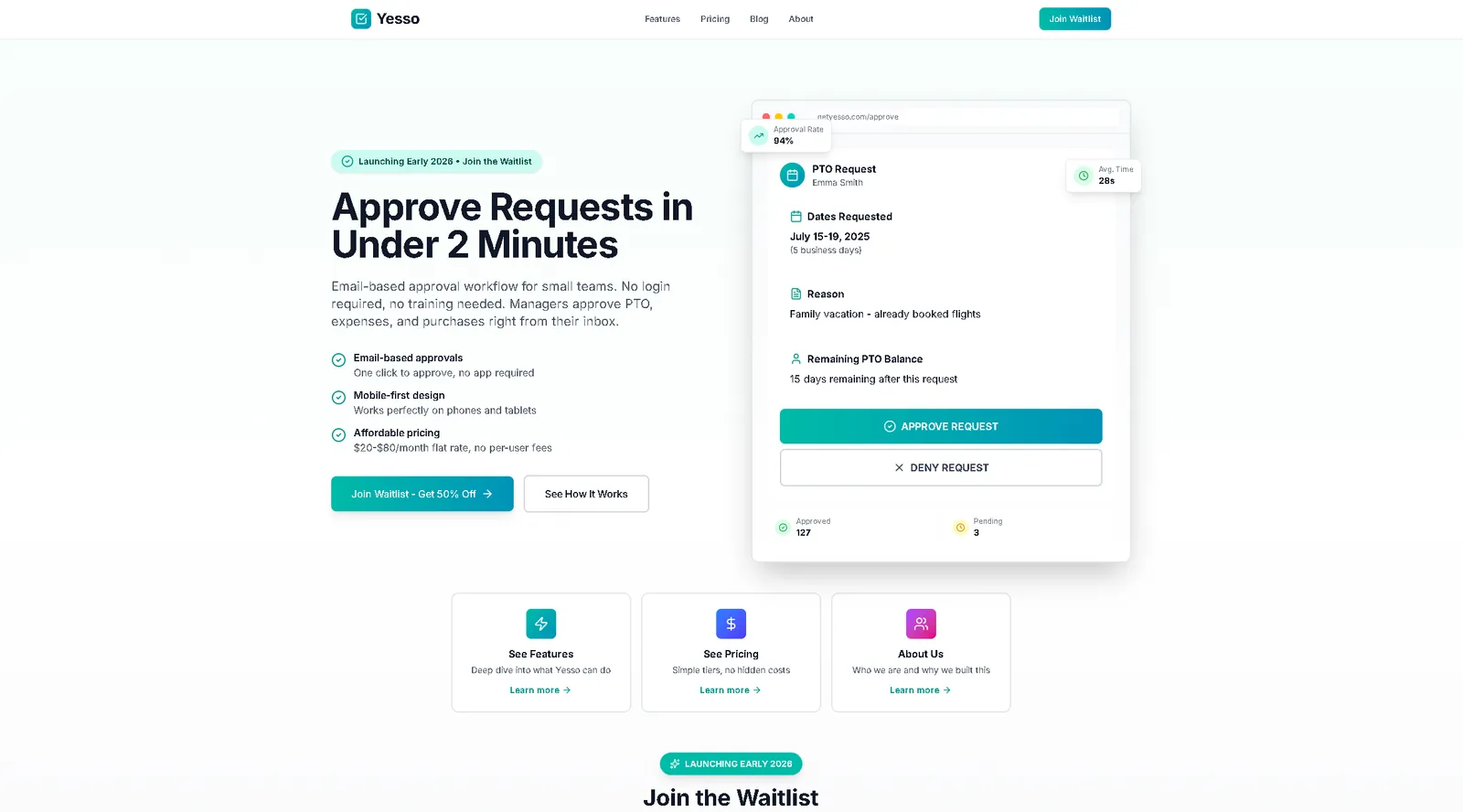
SaaS conversion lives and dies on time-to-understanding. 'Approve requests by email' is easy to say. The interactive inbox demo makes it visceral — a real PTO request sitting in a normal inbox, one click to approve, no login, no dashboard, no training. The surrounding inbox context — LinkedIn, Amazon, Slack, GitHub, Dropbox — is intentional. It makes Yesso feel native to the workflow people already live in, not another tool demanding attention. The 94% approval rate and 28s average time metrics in the mockup do two things: set a performance expectation, and make the product feel real before a single user has signed up.
Overview
Yesso is an email-based approval workflow tool built for small teams who are drowning in Slack threads and spreadsheet sign-offs. The core innovation is magic link authentication: approvers click a link in their email and the request is approved in under 30 seconds — no account, no login, no friction. Built in-house by Digitari Solutions as a full-stack SaaS product, Yesso has been in active development since late 2024 and is releasing in 2026.
The Challenge
Most approval tools are either too heavy (full workflow suites that take a month to implement) or too light (shared spreadsheets and Slack bots that don't scale). The goal was a tool simple enough to start using in an afternoon but robust enough to handle multi-tenant organizations, complex approval chains, and audit requirements. The technical challenge was making magic link auth feel effortless while keeping the backend stateless and production-ready.
Our Approach
We built on Next.js 15 with the App Router, using static generation for all public pages to hit sub-100ms TTFB globally via Vercel's edge network. Clerk handles authentication including magic link generation. Prisma with Supabase PostgreSQL provides type-safe queries with multi-tenant architecture from day one — every table includes organizationId for data isolation. Soft deletes via deletedAt timestamps handle audit compliance. The lazy initialization pattern for Resend and all service clients prevents build failures on Vercel. TypeScript caught 4 breaking changes when Next.js 15 changed route handler params to async Promises.
The Result
A production-ready SaaS platform achieving sub-100ms load times globally. 90+ Lighthouse on all public pages. Magic link auth that genuinely removes friction — approve a PTO request from your phone in the time it takes to read the email. Multi-tenant architecture that scales to thousands of organizations without refactoring. Releasing 2026.
Technical Architecture
Built for Production from Day One
Every architecture decision was made to prevent the refactors that kill early-stage products.